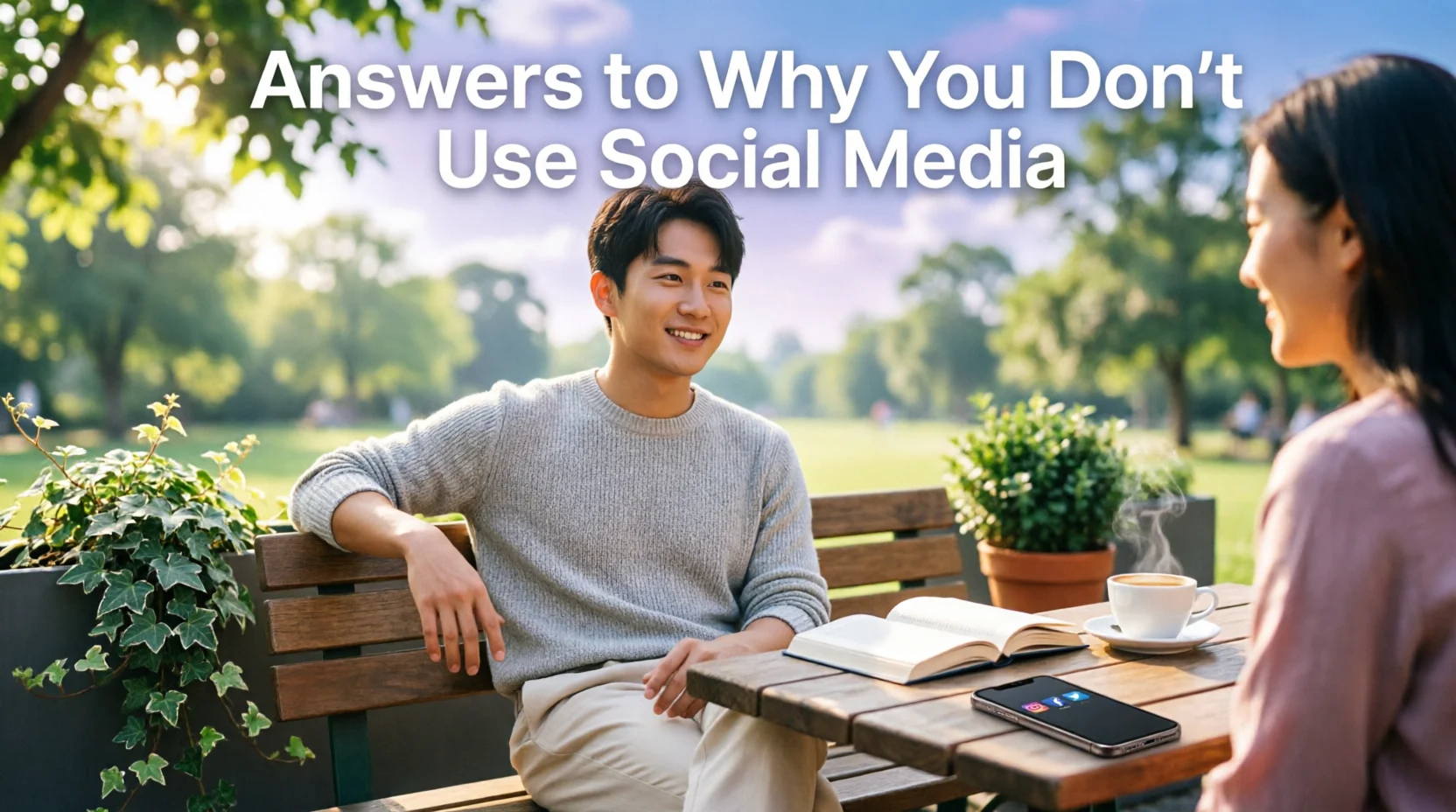
Not using social media is no longer unusual. While platforms such as Instagram, Facebook, TikTok, X, and Snapchat are part of everyday life for millions of people, plenty of others choose to stay offline or use social networks very selectively.
If someone asks, “Why don’t you use social media?”, there are many reasonable answers—from protecting your privacy and saving time to avoiding comparison, negativity, and digital distractions.
The best answers to why you don’t use social media are honest without sounding defensive. You do not need to criticize people who enjoy social platforms or provide a long explanation.
If you want a short response for a casual conversation or a thoughtful explanation for friends, coworkers, or family, the right answer should reflect your priorities. Below are 30 practical reasons, examples, and alternatives you can use to explain your choice naturally.
1. I Prefer to Protect My Privacy
Best for: People who value personal privacy and do not want much of their life publicly documented.
Alternative: “I’m just more comfortable keeping my personal life private.”
Social media often encourages people to share photos, opinions, locations, relationships, milestones, and daily activities. If you prefer keeping those details between yourself and people you actually know, privacy is a perfectly valid reason.
You do not have to dislike social media to value privacy. You may simply believe that some parts of life are better kept offline.
Examples:
“I don’t use social media because I prefer keeping my personal life private.”
“I’m not really comfortable sharing details about my life publicly, so I stay off most platforms.”
2. I Don’t Want to Waste Time Scrolling
Best for: People who find themselves easily distracted by endless feeds.
Alternative: “I’d rather spend that time doing something more productive.”
Social media is designed to keep users engaged, and it can be surprisingly easy to spend much longer scrolling than intended. Avoiding social platforms can create more time for work, hobbies, exercise, reading, or simply relaxing.
This answer is especially useful when someone assumes that not having social media means you are missing out.
Examples:
“I stopped using social media because I was spending too much time scrolling.”
“I’d rather use those spare minutes for reading, learning, or getting things done.”
3. I Find Social Media Distracting
Best for: Students, professionals, entrepreneurs, and anyone who needs focused attention.
Alternative: “I concentrate better when I have fewer digital distractions.”
Notifications, messages, trending topics, short videos, and constantly changing feeds can interrupt concentration. Some people discover that removing social media makes it easier to focus on important tasks.
You can explain this without claiming that social media is bad for everyone. It simply may not work well with the way you prefer to manage your attention.
Examples:
“I don’t use social media because I’m easily distracted by notifications.”
“I work better when I keep social apps out of my daily routine.”
4. I Don’t Enjoy Comparing My Life to Other People’s
Best for: People who want to avoid unnecessary comparison and unrealistic expectations.
Alternative: “I’m happier when I focus on my own life rather than comparing it with online posts.”
Social media can make other people’s lives look unusually exciting, successful, attractive, or perfect. Even when you understand that posts are carefully selected, constant exposure can still encourage comparison.
Choosing not to participate can be a simple way to protect your peace of mind and focus on your own progress.
Examples:
“I noticed that social media made me compare myself with other people too much.”
“I prefer measuring my progress against where I was before, not against someone’s online profile.”
5. I Prefer Real-Life Conversations
Best for: People who value face-to-face relationships.
Alternative: “I’d rather talk to people directly than communicate through a feed.”
For some people, a genuine conversation feels more meaningful than liking a post or exchanging comments. They would rather call a friend, meet for coffee, or have a longer private conversation.
Not using social media does not mean avoiding relationships. It can simply mean choosing different ways to maintain them.
Examples:
“I prefer calling my friends instead of keeping up with them through social media.”
“I enjoy real conversations more than interacting through posts and comments.”
6. I’m Happier Without It
Best for: People who have already experienced life without regular social media use.
Alternative: “I tried living without it and realized I actually prefer it.”
Sometimes the simplest answer is the most convincing. If you have experimented with deleting or reducing social apps and noticed that you felt calmer or more focused, there is no need to overexplain.
Your personal experience is enough.
Examples:
“I took a break from social media and felt better without it.”
“I realized I’m genuinely happier when I’m not checking social apps.”
7. I Don’t Like Sharing Personal Updates
Best for: People who prefer keeping milestones and experiences private.
Alternative: “I like experiencing things without documenting them online.”
Some people enjoy photographing and posting every major event. Others would rather experience the moment without thinking about how it will look on a screen.
Neither approach is automatically better. It is simply a difference in personality and preference.
Examples:
“I’d rather enjoy a trip than worry about posting pictures from it.”
“I don’t feel the need to share every part of my life online.”
8. I Want Fewer Notifications
Best for: Anyone who wants a quieter digital environment.
Alternative: “I’m trying to reduce unnecessary notifications.”
A phone can become noisy when multiple social platforms are constantly sending alerts. Removing social apps can dramatically reduce interruptions.
This is also a practical answer if you want to explain your choice without getting into deeper opinions about social media.
Examples:
“I stopped using social media because I wanted fewer notifications.”
“My phone feels much less distracting without social apps constantly alerting me.”
9. I Don’t Like Online Arguments
Best for: People who find internet debates exhausting.
Alternative: “I prefer conversations where people can actually understand each other.”
Social platforms can make disagreement feel more intense because conversations happen quickly and often without much context. Some people simply do not enjoy arguing with strangers online.
Choosing not to participate can be a form of protecting your time and energy.
Examples:
“I don’t use social media because I don’t enjoy arguing with strangers online.”
“I’d rather discuss important disagreements privately and respectfully.”
10. I Prefer a Simpler Digital Life
Best for: People interested in minimalism and digital decluttering.
Alternative: “I’m trying to keep my digital life simple.”
Digital minimalism is about being intentional with technology rather than automatically using every available platform. For some people, that means having fewer apps, fewer accounts, and fewer notifications.
Not having social media can fit naturally into that lifestyle.
Examples:
“I don’t use social media because I like keeping my digital life simple.”
“I’ve removed apps I don’t really need, and social media was one of them.”
11. I Don’t Feel Like I’m Missing Anything
Best for: People who are comfortable outside social media culture.
Alternative: “Honestly, I haven’t felt the need to join.”
Friends sometimes assume that someone without social media must feel excluded. But if your relationships and interests are already fulfilled through other channels, there may be little motivation to participate.
You can be aware of what is happening in the world without having an account on every platform.
Examples:
“I don’t use social media, but I don’t really feel like I’m missing out.”
“My friends keep me updated, and I’m perfectly comfortable without an account.”
12. I Prefer Direct Messaging
Best for: People who want online communication without public feeds.
Alternative: “I use private messaging when I need to stay in touch.”
You do not have to choose between being completely offline and maintaining a social media presence. Messaging apps, email, phone calls, and other private communication methods can provide plenty of connection.
This is a useful response when someone asks how you stay in contact with people.
Examples:
“I don’t use social media, but people can always message or call me.”
“I prefer private conversations instead of posting publicly.”
13. I Don’t Like the Pressure to Stay Active
Best for: People who dislike the expectation of constant posting.
Alternative: “I don’t want another platform I feel obligated to maintain.”
Social media can sometimes feel like another responsibility. There may be pressure to post regularly, respond quickly, follow trends, and keep an account looking active.
If that feels like work rather than enjoyment, opting out makes sense.
Examples:
“I don’t want to feel like I have to post just to keep an account active.”
“Social media started feeling like an obligation, so I decided not to use it.”
14. I Don’t Want to Follow Trends All the Time
Best for: People who prefer making independent choices.
Alternative: “I like deciding what interests me without constantly following online trends.”
Trends can be entertaining, but they can also create pressure to keep up with new memes, products, opinions, challenges, and cultural conversations.
Some people simply enjoy a slower pace.
Examples:
“I don’t use social media because I don’t need to know every trend immediately.”
“I prefer discovering things naturally instead of following whatever is trending.”
15. I Prefer to Read Long-Form Content
Best for: Readers, researchers, writers, and lifelong learners.
Alternative: “I prefer books, articles, newsletters, and longer conversations.”
Short-form content is convenient, but it is not the only way to learn. Some people prefer books, newspapers, detailed articles, podcasts, courses, or specialized websites.
If depth matters more to you than constant updates, social media may not be your preferred information source.
Examples:
“I prefer reading detailed articles rather than getting information from a social feed.”
“I learn more from books and long-form content, so I don’t rely on social media.”
16. I Don’t Trust Everything I See Online
Best for: People concerned about misinformation and unreliable content.
Alternative: “I prefer checking information through sources I trust.”
Social media can spread useful information quickly, but it can also amplify rumors, misleading headlines, edited clips, and unverified claims. Some people therefore prefer researching information independently.
A healthy approach is not necessarily avoiding the internet altogether. It is being selective about where information comes from.
Examples:
“I prefer verifying information before believing or sharing it.”
“I usually go directly to reliable sources instead of relying on social media posts.”
17. I Don’t Like Being Available All the Time
Best for: People who want stronger boundaries around communication.
Alternative: “I like having clear boundaries between online and offline life.”
Social platforms can create an expectation of instant replies. If you prefer answering messages when you have time rather than immediately, staying off social media can make that boundary easier.
You are allowed to be unavailable sometimes.
Examples:
“I don’t use social media because I don’t want to feel constantly connected.”
“I like checking messages when it suits me rather than being available 24/7.”
18. I Want to Be More Present
Best for: People who value being attentive during everyday experiences.
Alternative: “I’m trying to spend more time experiencing life instead of documenting it.”
Being present means giving your attention to what is happening around you. For some people, reducing social media helps them notice conversations, meals, travel, hobbies, and ordinary moments more fully.
It is a personal choice rather than a criticism of people who enjoy taking photos and posting them.
Examples:
“I’m trying to be more present, so I’ve stepped away from social media.”
“I enjoy being somewhere without thinking about whether I should post it.”
19. I Don’t Enjoy Self-Promotion
Best for: People who dislike building a public personal brand.
Alternative: “I’m more comfortable letting my work speak for itself.”
Many platforms encourage users to promote achievements, projects, opinions, and personal milestones. Some people enjoy that process; others find it uncomfortable.
If self-promotion feels unnatural to you, staying off social media can be an honest reflection of your personality.
Examples:
“I’m not very interested in promoting myself online.”
“I’d rather focus on doing good work than constantly talking about it online.”
20. I Don’t Need Everyone to Know What I’m Doing
Best for: People who value personal boundaries.
Alternative: “I’m comfortable keeping my plans and activities to myself.”
Not every experience needs an audience. You can enjoy a hobby, take a trip, celebrate a milestone, or achieve a goal without announcing it publicly.
Privacy can be especially valuable when you want your personal life separate from your public or professional identity.
Examples:
“I’m pretty private, so I don’t feel the need to share what I’m doing online.”
“I like keeping my plans between myself and the people involved.”
21. I Find Social Media Mentally Exhausting
Best for: People who feel overwhelmed by constant digital information.
Alternative: “I feel better when I limit the amount of information coming at me.”
A social feed can contain news, opinions, advertisements, personal updates, arguments, entertainment, and emotional stories all within a few minutes. For some people, that constant stream becomes tiring.
Taking a step back can create a quieter mental environment.
Examples:
“I found the constant stream of information exhausting.”
“I’m more relaxed when I’m not checking social media throughout the day.”
22. I Don’t Like the Pressure of Other People’s Opinions
Best for: People who prefer making decisions independently.
Alternative: “I’d rather form my opinions without constantly seeing everyone else’s reactions.”
Online opinions can be useful, but seeing thousands of reactions to every topic can make it difficult to think independently. Some people prefer taking time to develop their own views.
This does not mean ignoring other perspectives. It means choosing when and how you encounter them.
Examples:
“I prefer forming my own opinion before reading hundreds of online reactions.”
“I don’t want a social feed influencing every decision I make.”
23. I Want Better Control Over My Attention
Best for: People practicing intentional technology use.
Alternative: “I’m more intentional about where I put my attention.”
Attention is limited. When you repeatedly check social apps throughout the day, small interruptions can add up.
Removing those distractions can help you decide when to focus, relax, communicate, and consume information.
Examples:
“I stopped using social media because I want better control over my attention.”
“I’d rather choose what I focus on than let an algorithm decide what appears next.”
24. I Prefer Offline Hobbies
Best for: People who enjoy reading, sports, crafts, music, gardening, travel, or other offline activities.
Alternative: “I have plenty of things I enjoy doing away from screens.”
A full life does not require a social media account. Offline hobbies can provide entertainment, creativity, exercise, social interaction, and personal growth without a constantly updating feed.
Examples:
“I spend my free time reading and working on hobbies instead.”
“I enjoy being outdoors, so I don’t spend much time on social apps.”
25. I Don’t Want My Digital Footprint to Grow
Best for: People who think carefully about their long-term online presence.
Alternative: “I’m careful about what information I leave online.”
A digital footprint can include posts, photos, comments, profiles, likes, and other online activity. Some people prefer limiting how much personal information accumulates online over time.
That approach can be especially appealing to people who think about future privacy and professional reputation.
Examples:
“I’m careful about creating a large digital footprint.”
“I prefer sharing personal information only when there’s a good reason to do so.”
26. I Don’t Need Social Media for My Relationships
Best for: People with strong offline or direct relationships.
Alternative: “The people who matter to me already know how to reach me.”
Social media can make staying connected convenient, but it is not the only way to maintain relationships. Phone calls, messaging, email, and in-person meetings can be just as meaningful.
The important thing is connection, not necessarily the platform used.
Examples:
“My close friends know how to contact me, so I don’t need social media.”
“I keep in touch through calls and messages instead of social networks.”
27. I Tried It and It Wasn’t for Me
Best for: People who have previously used social media.
Alternative: “I gave it a fair try, but I decided it wasn’t something I enjoyed.”
This can be one of the easiest answers because it does not require a complicated argument. You tried the experience and made a personal decision.
People have different preferences, and not every digital service needs to suit everyone.
Examples:
“I used social media for a while, but eventually realized I preferred life without it.”
“I tried several platforms, and none of them really added value to my life.”
28. I’m Taking a Break From Social Media
Best for: People who are temporarily reducing their social media use.
Alternative: “I’m doing a digital detox and seeing how I feel.”
You do not have to decide that you will never use social media again. A break can help you understand how these platforms affect your routine, attention, and relationships.
After a break, you can decide whether to return, use social media less, or stay away completely.
Examples:
“I’m taking a break from social media for a while.”
“I’m doing a digital detox and enjoying the extra space it gives me.”
29. I Use Social Media Only When I Need It
Best for: People who want a limited or professional relationship with social platforms.
Alternative: “I keep my social media use very selective.”
Not everyone has to choose between being highly active and completely offline. You might use LinkedIn for work, a platform for a specific hobby, or a private account without regularly posting.
The goal is to use technology intentionally rather than automatically.
Examples:
“I only use social media for specific professional purposes.”
“I have a limited account, but I don’t spend much time on social platforms.”
30. It’s Simply a Personal Choice
Best for: When you want a short, confident answer.
Alternative: “It just isn’t something I want in my life right now.”
Sometimes you do not need a detailed explanation. Your decision not to use social media does not require approval from everyone around you.
A calm, confident response can prevent the conversation from becoming unnecessarily complicated. You can be respectful of other people’s choices while making your own.
Examples:
“I don’t use social media because it’s simply not for me.”
“I respect that other people enjoy it, but I’m happier without it.”
FAQs:
Why do some people choose not to use social media?
People avoid social media for many reasons, including privacy, time management, digital distraction, online negativity, comparison, information overload, and a preference for real-world communication. For some, it is simply a personal preference.
Is it weird to not have social media?
No. Social media is common, but it is not a requirement for having friendships, professional relationships, or an active life. People can stay connected through calls, messaging apps, email, communities, and face-to-face conversations.
What is a polite answer when someone asks why you don’t use social media?
A simple response works well: “I just prefer keeping my life private and spending less time online.” You can also say, “I tried it, but I realized I’m happier without it.”
How do I explain not having social media without sounding rude?
Focus on your own preferences instead of criticizing other people’s choices. Saying “I prefer staying offline” sounds more respectful than telling someone that social media is bad or that people who use it are wasting their lives.
Can I use social media less without quitting completely?
Absolutely. You can delete some apps, turn off notifications, limit screen time, use private accounts, unfollow unnecessary content, or check platforms only at specific times. Social media does not have to be an all-or-nothing decision.
Conclusion
There are many good answers to why you don’t use social media, and you do not need to defend your choice. Maybe you value privacy, want to protect your attention, dislike online comparison, prefer real-life relationships, or simply feel happier without constantly checking a feed. Your reason can be practical, personal, temporary, or as simple as saying, “It’s just not for me.”
The most important thing is to choose an answer that feels authentic to you. You can respect people who enjoy Instagram, Facebook, TikTok, X, or other social networks while still deciding that they are not right for your lifestyle. If stepping away from social media gives you more time, peace, focus, privacy, or meaningful connection, that is a valid reason to stay offline.

Hi, I’m Finn Stephens, the Administrator at ReplyWays. I manage our platform to ensure reliable, helpful content and a smooth user experience, helping everyone find the perfect reply for every conversation.