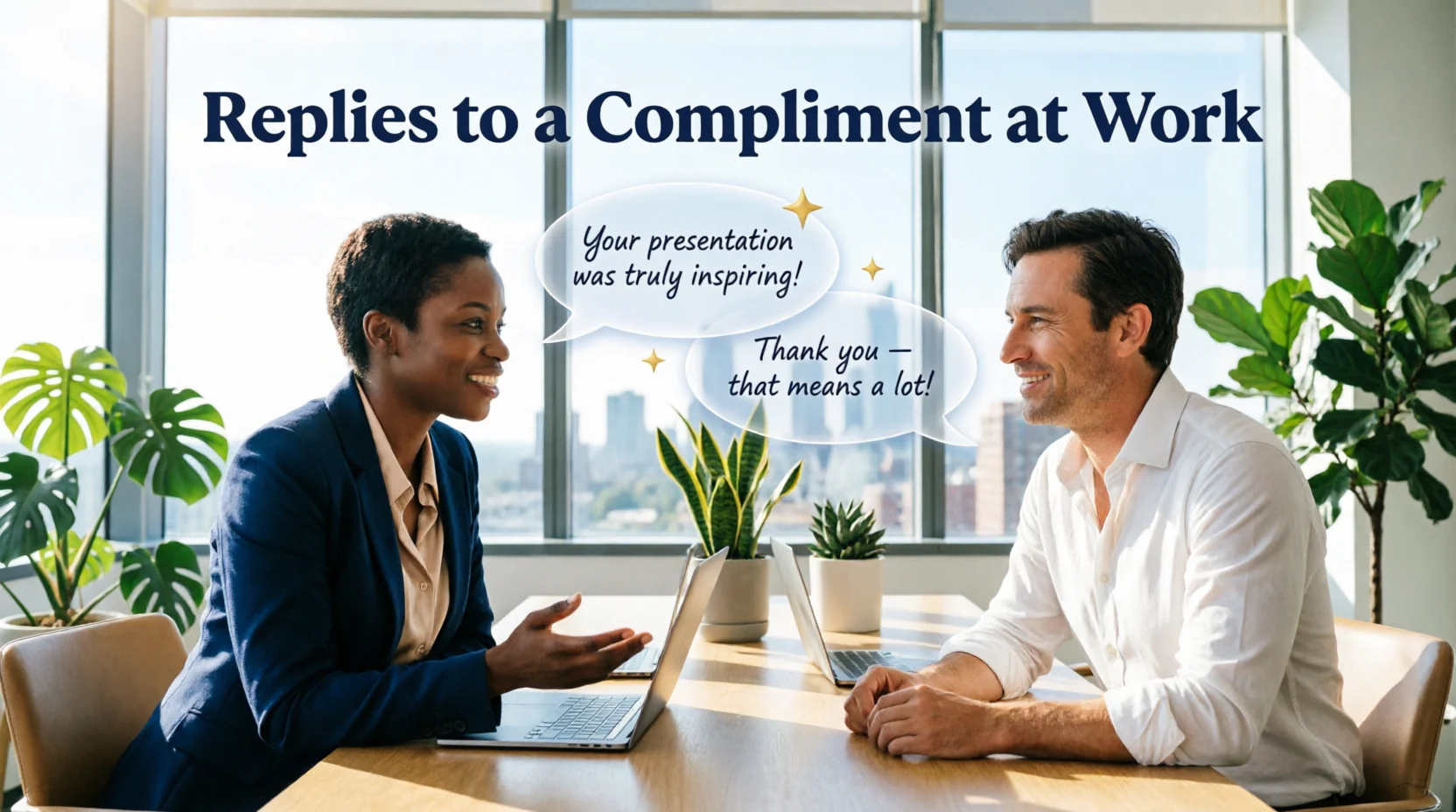
Receiving a compliment at work can feel great, but knowing exactly how to respond is not always easy. If your manager praises your performance, a coworker notices your effort, or a client appreciates your help, a thoughtful response can strengthen professional relationships without sounding awkward or overly modest.
The best replies to a compliment at work are usually simple, sincere, and appropriate for the situation. You do not need a complicated response. A warm “Thank you, I really appreciate that” can show confidence, professionalism, and gratitude while keeping the conversation natural. Here are practical responses you can use in everyday workplace situations.
1. “Thank You, I Really Appreciate That”
A straightforward thank-you is often the best response. It acknowledges the compliment without making the moment uncomfortable.
Best for: Everyday workplace compliments.
Alternative: “Thank you, that means a lot.”
Examples:
“Thank you, I really appreciate that.”
“Thanks, I’m glad my work made a difference.”
2. “Thank You, I’m Glad You Noticed”
This response works especially well when someone recognizes effort that may have taken considerable time or attention.
Best for: Compliments about effort or dedication.
Alternative: “Thanks, I put a lot of thought into it.”
Examples:
“Thank you, I’m glad you noticed the extra effort.”
“Thanks, I spent quite a bit of time making sure everything was right.”
3. “That’s Very Kind of You”
When you want to sound warm while remaining professional, this is a polished option.
Best for: Friendly coworkers and professional acquaintances.
Alternative: “That’s very thoughtful of you.”
Examples:
“That’s very kind of you to say.”
“Thank you, that’s really thoughtful.”
4. “Thanks, I’m Happy With How It Turned Out”
This response accepts praise while showing confidence in your work.
Best for: Compliments about completed projects.
Alternative: “Thank you, I’m pleased with the result too.”
Examples:
“Thanks, I’m happy with how the presentation turned out.”
“Thank you, I’m pleased with the final result.”
5. “Thank You, I Worked Hard on It”
Mentioning your effort can be appropriate when someone specifically praises your work.
Best for: Major assignments or challenging projects.
Alternative: “Thanks, I put a lot of effort into it.”
Examples:
“Thank you, I worked hard to get everything ready.”
“Thanks, I put a lot of time into making it work.”
6. “I Appreciate the Feedback”
Not every compliment needs an enthusiastic response. This professional phrase keeps things measured.
Best for: Formal workplace environments.
Alternative: “I appreciate you saying that.”
Examples:
“Thank you, I appreciate the positive feedback.”
“I appreciate that feedback. It’s encouraging to hear.”
7. “Thank You—That’s Encouraging to Hear”
This is useful when positive feedback gives you confidence about your performance.
Best for: Performance-related compliments.
Alternative: “That’s really encouraging.”
Examples:
“Thank you, that’s encouraging to hear from you.”
“I appreciate that. It’s good to know I’m heading in the right direction.”
8. “Thanks, I’m Glad It Was Helpful”
When someone compliments you for helping them, focusing on the positive outcome keeps your response gracious.
Best for: Helping coworkers or clients.
Alternative: “I’m happy I could help.”
Examples:
“Thanks, I’m glad the information was helpful.”
“I appreciate that. I’m happy I could make things easier.”
9. “Thank You, I Learned a Lot From the Experience”
This response combines confidence with humility and a growth mindset.
Best for: Compliments after challenging assignments.
Alternative: “Thanks, it was a great learning experience.”
Examples:
“Thank you. I learned a lot while working on that project.”
“Thanks, the experience taught me quite a bit.”
10. “I Appreciate That—The Team Helped Too”
Sometimes a compliment reflects a team effort. Giving appropriate credit can demonstrate strong professional character.
Best for: Team projects.
Alternative: “Thank you. We all contributed to the result.”
Examples:
“Thank you. The team worked really well together on this.”
“I appreciate that. Everyone played an important role.”
11. “Thanks, We Put a Lot of Work Into It”
This response accepts the compliment while recognizing collective effort.
Best for: Group achievements.
Alternative: “Thank you. It was definitely a team effort.”
Examples:
“Thanks, we put a lot of work into getting it ready.”
“I appreciate that. Everyone contributed to the final result.”
12. “Thank You, That Means a Lot Coming From You”
This can be especially effective when the compliment comes from someone whose opinion you respect.
Best for: Mentors, managers, and experienced colleagues.
Alternative: “I really value your feedback.”
Examples:
“Thank you, that means a lot coming from you.”
“I appreciate that, especially given your experience.”
13. “Thanks, I Appreciate You Taking the Time to Say That”
This response is warm and professional, particularly when someone offers thoughtful feedback.
Best for: Detailed or personal professional compliments.
Alternative: “Thank you for taking the time to tell me.”
Examples:
“Thanks, I appreciate you taking the time to say that.”
“That’s very kind. Thank you for sharing that feedback.”
14. “Thank You, I’m Always Trying to Improve”
This response demonstrates a growth-oriented attitude without dismissing the compliment.
Best for: Skills, performance, or professional development compliments.
Alternative: “Thanks, I’m always looking for ways to improve.”
Examples:
“Thank you. I’m always trying to improve my communication skills.”
“I appreciate that. I’m working on getting better every day.”
15. “Thanks, I’m Glad the Presentation Worked Well”
Specific responses often sound more natural than generic ones.
Best for: Presentations, meetings, and public speaking.
Alternative: “Thank you, I’m glad it came across clearly.”
Examples:
“Thanks, I’m glad the presentation was useful.”
“I appreciate that. I wanted to make the main points easy to understand.”
16. “Thank You, I’m Happy You Found It Useful”
This is a practical response when someone praises your advice, research, or work product.
Best for: Reports, recommendations, and professional assistance.
Alternative: “I’m glad it was useful.”
Examples:
“Thank you, I’m happy you found the report useful.”
“Thanks, I’m glad the recommendations helped.”
17. “That’s Great to Hear”
Sometimes a short response is all you need.
Best for: Casual workplace conversations.
Alternative: “I’m glad to hear that.”
Examples:
“Thanks, that’s great to hear.”
“I appreciate it. I’m glad the work was well received.”
18. “Thanks for the Encouragement”
This response works well when the compliment motivates you to continue doing good work.
Best for: Ongoing projects and career development.
Alternative: “I really appreciate the encouragement.”
Examples:
“Thanks for the encouragement. It keeps me motivated.”
“I appreciate that—it’s great encouragement for the next phase.”
19. “Thank You, I’m Proud of the Result”
There is nothing wrong with expressing appropriate pride in your work.
Best for: Significant achievements.
Alternative: “Thank you, I’m pleased with what we accomplished.”
Examples:
“Thank you, I’m proud of how the project turned out.”
“I appreciate that. It’s something I’m genuinely proud of.”
20. “Thanks, I Enjoyed Working on It”
This response adds personality while staying workplace appropriate.
Best for: Creative or interesting assignments.
Alternative: “Thank you, I really enjoyed the project.”
Examples:
“Thanks, I enjoyed working on the campaign.”
“I appreciate that. It was a fun project to be part of.”
21. “I’m Glad My Work Made a Difference”
A compliment becomes an opportunity to highlight the value of your contribution.
Best for: Results-focused compliments.
Alternative: “I’m glad it had a positive impact.”
Examples:
“Thank you, I’m glad my work made a difference.”
“It’s great to hear that the changes actually helped the team.”
22. “Thank You, I Appreciate Your Confidence in Me”
This is particularly useful when someone praises your ability to handle responsibility.
Best for: Leadership or responsibility-related compliments.
Alternative: “Thanks for trusting me with it.”
Examples:
“Thank you, I appreciate your confidence in me.”
“Thanks, I’m grateful that you trusted me with the project.”
23. “Thanks, I’m Glad I Could Deliver What You Needed”
This response keeps the focus on meeting expectations.
Best for: Clients, managers, or stakeholders.
Alternative: “I’m glad I could meet your expectations.”
Examples:
“Thank you, I’m glad I could deliver what you needed.”
“I appreciate that. I’m happy the final result met your expectations.”
24. “Thank You for the Positive Feedback”
This is one of the safest professional responses when you are unsure what else to say.
Best for: Formal professional settings.
Alternative: “I appreciate the feedback.”
Examples:
“Thank you for the positive feedback on my work.”
“I appreciate you sharing that with me.”
25. “Thanks, I’ll Keep It Up”
This response shows confidence and willingness to maintain a good standard.
Best for: Ongoing performance recognition.
Alternative: “Thank you. I’ll keep working at it.”
Examples:
“Thanks, I’ll keep it up.”
“I appreciate that. I’ll keep working to maintain the same standard.”
26. “That’s Really Nice to Hear From a Colleague”
This can make a coworker feel appreciated for offering genuine encouragement.
Best for: Peer-to-peer compliments.
Alternative: “Thanks, I really appreciate that from you.”
Examples:
“That’s really nice to hear from a colleague. Thank you.”
“Thanks, I appreciate the support.”
27. “Thank You, I Appreciate Your Support”
Compliments sometimes come alongside encouragement. Acknowledging the support can strengthen workplace relationships.
Best for: Supportive coworkers and managers.
Alternative: “Your support means a lot.”
Examples:
“Thank you, I really appreciate your support.”
“Thanks, having your support made the project easier.”
28. “Thanks, I’m Glad We Got It Done”
This casual but professional response is ideal after a demanding task.
Best for: Completed deadlines and team assignments.
Alternative: “Thank you. I’m glad we were able to finish it successfully.”
Examples:
“Thanks, I’m glad we got it done on time.”
“I appreciate that. It feels good to have the project completed.”
29. “Thank You, I’ll Take That as a Compliment”
For friendly workplace relationships, this can add a little humor without becoming inappropriate.
Best for: Lighthearted office conversations.
Alternative: “Thanks, I’ll happily take that.”
Examples:
“Thank you, I’ll definitely take that as a compliment.”
“Thanks, I’ll happily accept that compliment.”
30. “Thank You, That’s Kind of You to Notice”
This response is especially useful when someone notices a small improvement or detail.
Best for: Subtle workplace compliments.
Alternative: “Thanks for noticing.”
Examples:
“Thank you, that’s kind of you to notice the changes.”
“Thanks, I appreciate you noticing the extra detail.”
How to Choose the Right Reply to a Compliment at Work
The best response depends on who complimented you, what they praised, and how formal the workplace is. A manager may appreciate a concise and professional answer, while a close coworker may respond naturally to something warmer or more playful.
The main goal is to accept the compliment instead of immediately rejecting it. Avoid responses such as “It was nothing” or “I’m not that good,” because excessive modesty can unintentionally undermine your contribution. A simple thank-you usually communicates confidence and professionalism.
FAQs:
1. What is the best reply to a compliment at work?
A simple “Thank you, I really appreciate that” is one of the safest and most professional responses. You can make it more specific by mentioning the project, effort, or result being praised.
2. How do I respond to a compliment from my boss?
Keep the response professional and sincere. Try, “Thank you, I really appreciate the feedback,” or “Thank you, that’s encouraging to hear.”
3. How do I respond to a compliment from a coworker?
A friendly “Thanks, I appreciate that” works well. If the coworker helped with the task, you can also acknowledge their contribution.
4. Should I compliment the other person back?
Not necessarily. You should not feel pressured to return a compliment simply because someone praised you. A genuine thank-you is enough. If you have a sincere compliment for them, however, sharing it can make the exchange warmer.
5. How can I accept a compliment without sounding arrogant?
Focus on gratitude rather than superiority. Saying “Thank you, I worked hard on it” acknowledges your effort without suggesting that you are better than others.
Conclusion
Knowing how to respond to praise is an important but often overlooked workplace communication skill. The strongest replies to a compliment at work are usually short, genuine, and confident. You can simply say thank you, acknowledge the feedback, recognize your team, or briefly mention the effort behind the result.
Most importantly, do not feel uncomfortable accepting positive feedback. When someone recognizes your contribution, accepting the compliment gracefully shows confidence, emotional intelligence, and professionalism. Choose a response that fits the situation and your relationship with the other person, and keep it natural.

I’m Maya Campbell, passionate about crafting thoughtful replies that help people communicate confidently. I enjoy creating practical, friendly response ideas, making conversations easier, more meaningful, engaging, and authentic every day.