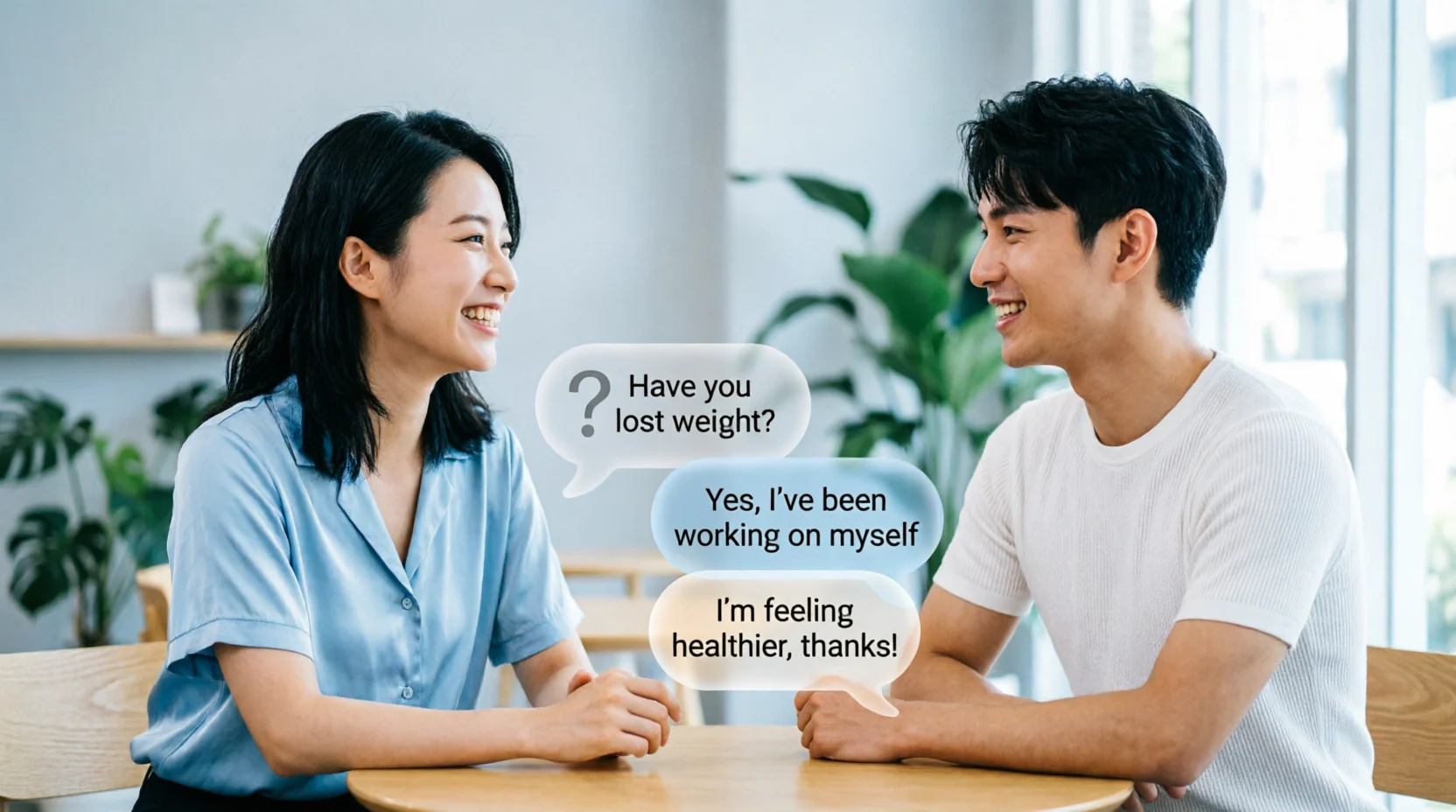
“Have you lost weight?” can sound like a simple compliment or observation, but it can sometimes catch you completely off guard. You may be happy with the change, uncomfortable discussing your body, unsure how to respond, or simply not want to make the conversation about your appearance.
The good news is that there is no single correct response. The best answer depends on your personality, your relationship with the person asking, and how comfortable you feel discussing weight loss. These responses to “have you lost weight?” range from friendly and appreciative to humorous, confident, private, and boundary-setting, so you can choose words that feel natural to you.
1. Say “Thank You” and Keep It Simple
Sometimes the easiest response is also the best one. If you appreciate the comment and do not mind acknowledging the change, a simple “Thank you” keeps the conversation comfortable.
Best for: Casual conversations, compliments from friends, and situations where you do not want to explain anything.
Alternative: “Thanks, I appreciate you noticing.”
Examples:
“Thank you! That’s kind of you to notice.”
“Thanks! I appreciate the compliment.”
2. Give a Short, Honest Answer
If you have lost weight and feel comfortable confirming it, you can answer directly without providing personal details.
Best for: People you trust and straightforward conversations.
Alternative: “Yes, I have lost a little recently.”
Examples:
“Yeah, I’ve lost some weight over the past few months.”
“Yes, I have. I’m feeling good about it.”
3. Shift the Conversation to How You Feel
Weight is only one part of your well-being. You can redirect attention toward energy, confidence, fitness, or general health.
Best for: People who genuinely want to know how you are doing.
Alternative: “I’ve been feeling healthier and more energetic lately.”
Examples:
“I have, but honestly, I’m more excited about having more energy.”
“I’ve noticed a difference in my fitness, which feels great.”
4. Use a Warm and Friendly Response
A warm answer can acknowledge the person’s observation while keeping the mood positive and relaxed.
Best for: Friends, relatives, coworkers, and friendly social situations.
Alternative: “You noticed! I’ve been making a few changes.”
Examples:
“You noticed! I’ve been taking better care of myself lately.”
“Thanks for noticing. I’ve been feeling pretty good.”
5. Respond Without Discussing Numbers
You never have to share how many pounds or kilograms you have lost. A general response can protect your privacy.
Best for: Situations where you are comfortable confirming weight loss but not discussing measurements.
Alternative: “Yes, but I’d rather not get into numbers.”
Examples:
“I have lost some weight, but I don’t really track the numbers.”
“Yes, a little. I prefer to focus on how I feel.”
6. Politely Say You Would Rather Not Discuss Weight
Your body does not have to become a conversation topic simply because someone notices a change.
Best for: Personal boundaries and conversations that make you uncomfortable.
Alternative: “I’d rather not talk about my weight, but thank you for understanding.”
Examples:
“I appreciate your concern, but I prefer not to discuss my weight.”
“I’m keeping that private, if you don’t mind.”
7. Use Humor to Keep Things Light
A little humor can make an unexpected question feel less awkward, especially with people who understand your sense of humor.
Best for: Close friends and relaxed social settings.
Alternative: “Apparently my clothes have been keeping secrets.”
Examples:
“Maybe my jeans are finally telling the truth!”
“I guess my wardrobe noticed before everyone else did.”
8. Say You Have Been Working on Your Lifestyle
If lifestyle changes are the reason for your weight loss, you can mention them without giving a detailed explanation.
Best for: Conversations where you want to acknowledge positive habits.
Alternative: “I’ve been making some healthier lifestyle changes.”
Examples:
“I’ve been eating a little differently and staying more active.”
“I’ve been working on some healthier routines lately.”
9. Focus on Confidence Instead of Weight
If you feel more confident, energetic, or comfortable, that can be a more meaningful answer than discussing body size.
Best for: Positive conversations about personal progress.
Alternative: “I’m feeling more confident lately.”
Examples:
“I have changed a bit, but I’m mostly happy because I feel more confident.”
“I’m feeling comfortable in my clothes again, which is what matters to me.”
10. Answer With “I’m Feeling Good”
This is one of the safest and most natural responses because it redirects the conversation toward your overall experience.
Best for: Almost any casual situation.
Alternative: “I’m doing well and feeling healthy.”
Examples:
“I have, and I’m feeling really good these days.”
“I’ve noticed some changes, and I’m happy with how I feel.”
11. When You Do Not Know What to Say
Being caught off guard is completely normal. You can give yourself time rather than forcing a detailed answer.
Best for: Unexpected comments or conversations with acquaintances.
Alternative: “Oh, I hadn’t really thought about it.”
Examples:
“Maybe! I haven’t been paying much attention to the scale.”
“Possibly. I’ve been more focused on other things lately.”
12. When the Question Comes From a Coworker
Workplaces are not always the right setting for conversations about someone’s body. A professional but friendly response can help.
Best for: Office conversations and professional relationships.
Alternative: “I’ve been feeling well, thanks.”
Examples:
“I appreciate you asking. I’m doing well.”
“I have been making some lifestyle changes, but I usually keep health matters private.”
13. When a Friend Asks
A trusted friend may be asking because they genuinely care. You can be more open if you feel comfortable.
Best for: Close friendships.
Alternative: “Yeah, I’ve been working on some changes.”
Examples:
“Yeah, I’ve lost a little. I’ve been trying to take better care of myself.”
“I have, actually. I’m happy with how things are going.”
14. When a Family Member Asks
Family members may be more direct than other people. You can answer warmly while deciding how much detail to share.
Best for: Parents, siblings, cousins, and other relatives.
Alternative: “Yes, I’ve noticed some changes too.”
Examples:
“Yeah, I have. I’ve been feeling pretty good lately.”
“I have, but I’d rather not focus too much on the number.”
15. When You Do Not Want Praise About Weight Loss
Not everyone sees weight loss as something to celebrate. If you prefer not to receive comments about your body, say so clearly.
Best for: Maintaining a personal boundary.
Alternative: “I’d appreciate it if we didn’t focus on my body.”
Examples:
“I know you mean that positively, but I’m more comfortable not discussing my weight.”
“Thanks for caring. I’d rather talk about something else.”
16. When You Are Proud of Your Progress
If weight loss represents a goal you worked toward and you are comfortable talking about it, you can acknowledge your progress.
Best for: Celebrating a personal goal.
Alternative: “Yes, I’ve worked hard on some healthy habits.”
Examples:
“Yes! I’ve been consistent with my routine, and I’m proud of the progress.”
“I have, and it feels good to see the changes from my efforts.”
17. When You Want to Avoid the Word “Weight”
You can acknowledge the observation without repeating the word “weight.” This can make the conversation feel less focused on body size.
Best for: People who prefer body-neutral language.
Alternative: “I’ve noticed some changes too.”
Examples:
“Yeah, my clothes fit a little differently now.”
“I’ve noticed a few changes, but I’m mainly focused on feeling well.”
18. When You Are Not Sure Whether It Is a Compliment
Sometimes “Have you lost weight?” is difficult to interpret. A neutral response prevents you from making assumptions.
Best for: Acquaintances or ambiguous situations.
Alternative: “Oh, really? What makes you ask?”
Examples:
“Maybe. What made you notice?”
“I’m not sure. Have I?”
19. Give a Confident One-Liner
Confidence can make a short answer feel complete. You do not owe anyone a long explanation.
Best for: People who prefer direct communication.
Alternative: “Yes, and I feel great.”
Examples:
“I have, and I’m happy with where I am.”
“Yep, and I’m feeling better than ever.”
20. Change the Subject Naturally
If you want the conversation to move on, answer briefly and introduce another topic.
Best for: Avoiding prolonged discussion about appearance.
Alternative: “Thanks! Anyway, how have you been?”
Examples:
“Thanks for noticing. So, how was your weekend?”
“I have noticed some changes. By the way, how is your new job going?”
21. Respond When You Have Lost Weight Without Trying
Unexpected weight loss can make comments about your body uncomfortable, particularly if you did not intend to lose weight.
Best for: Unplanned changes or situations where you do not want congratulations.
Alternative: “Yes, but it wasn’t intentional.”
Examples:
“I have lost some weight, although it wasn’t something I was trying to do.”
“Yes, I noticed it too, but I’m not really sure why.”
22. When You Want to Keep Health Information Private
Your health history, diet, exercise habits, and medical information are personal. A respectful boundary is enough.
Best for: Sensitive or personal conversations.
Alternative: “I’m keeping my health information private right now.”
Examples:
“Thanks for asking, but I don’t really discuss personal health details.”
“I appreciate your concern, but I’d rather keep that between me and my doctor.”
23. When Someone Keeps Asking About Your Weight
If someone repeatedly comments on your body, a firmer response may be necessary.
Best for: Repeated questions or unwanted body comments.
Alternative: “I’d really prefer that we stop discussing my weight.”
Examples:
“I understand you’re curious, but I don’t want to keep talking about my body.”
“I’d appreciate it if you could leave comments about my weight out of our conversations.”
24. When You Want to Sound Playful
A playful answer can reduce tension without revealing anything personal.
Best for: Friends and people who appreciate casual humor.
Alternative: “My clothes might be responsible for the rumor.”
Examples:
“Apparently my wardrobe has started making announcements.”
“Maybe I’ve been shrinking in the wash!”
25. When You Want to Mention Healthy Habits
If your goal is to encourage a healthy, balanced conversation, talk about habits rather than appearance.
Best for: Discussions about wellness and lifestyle.
Alternative: “I’ve been focusing on balanced meals, movement, and better routines.”
Examples:
“I’ve been walking more and paying attention to my eating habits.”
“I’ve been working on consistent sleep, regular movement, and balanced meals.”
26. When You Want to Sound Grateful
If someone is being genuinely supportive, gratitude can be an easy way to respond.
Best for: Encouraging conversations with people you trust.
Alternative: “That’s really kind of you to say.”
Examples:
“Thank you! It means a lot that you noticed the effort I’ve been making.”
“That’s sweet of you. I’ve been trying to take better care of myself.”
27. When You Want to Say “It’s Complicated”
Weight changes can happen for many reasons, and sometimes a simple answer does not capture the whole story.
Best for: Situations where there is more context but you do not want to explain it.
Alternative: “There’s a bit more to it than that.”
Examples:
“I have lost some weight, but there’s a lot behind the change.”
“It’s a complicated story, so I’d rather not get into it right now.”
28. When Someone You Barely Know Asks
A stranger or distant acquaintance does not automatically deserve personal information.
Best for: New acquaintances, casual encounters, and public situations.
Alternative: “I’m doing well, thanks.”
Examples:
“I’m feeling good, thank you.”
“Thanks for asking. I’m doing fine.”
29. When You Want to Encourage a Body-Neutral Conversation
Body-neutral responses acknowledge your experience without suggesting that a particular body size is inherently better.
Best for: People who prefer wellness-focused conversations.
Alternative: “I’m focusing more on how my body feels than how it looks.”
Examples:
“I’m trying to focus on strength and energy rather than the scale.”
“I’m happiest when I feel healthy and comfortable, regardless of the number.”
30. The Best All-Purpose Response
If you want one response that works in most situations, keep it short, positive, and flexible.
Best for: Almost any situation where someone asks, “Have you lost weight?”
Alternative: “I’ve noticed some changes, and I’m feeling good. Thanks for asking.”
Examples:
“Yeah, a little. I’m feeling good, thanks!”
“I have noticed a difference, but I’m mainly focused on feeling healthy.”
FAQs:
Is “Thank you” a good response to “Have you lost weight?”
Yes. If you are comfortable with the comment, “Thank you” is polite, natural, and does not require you to share personal information.
What should I say if I do not want to discuss my weight?
Try a simple boundary such as, “I’d rather not talk about my weight, but thank you for understanding.” You can then change the subject.
How do I respond when someone asks how much weight I lost?
You can decline to give a number. For example, say, “I don’t really keep track of the numbers,” or “I prefer not to discuss measurements.”
What is a funny response to “Have you lost weight?”
With someone who appreciates humor, you could say, “Maybe my jeans have been spreading the news.” Keep humor appropriate to your relationship with the person.
Is it rude to ask someone if they lost weight?
It can be uncomfortable because weight changes may be connected to personal, emotional, or health-related circumstances. When in doubt, focusing on how someone is doing rather than their body is usually more considerate.
Conclusion
Finding the right responses to “have you lost weight?” is less about having a perfect sentence and more about choosing a response that matches your comfort level. You can say thank you, confirm the change, mention that you feel healthier, use humor, or politely set a boundary.
Most importantly, remember that you control the conversation about your body. If you are proud of your progress, dealing with an unexpected change, or simply uninterested in discussing weight, a short and confident response is enough. Choose language that feels authentic to you, protect your privacy when needed, and keep the conversation focused on what makes you comfortable.

I’m Brody Burke, passionate about crafting thoughtful replies that make conversations easier. I enjoy sharing practical communication tips, helping readers respond confidently, build stronger connections, and express themselves with clarity.