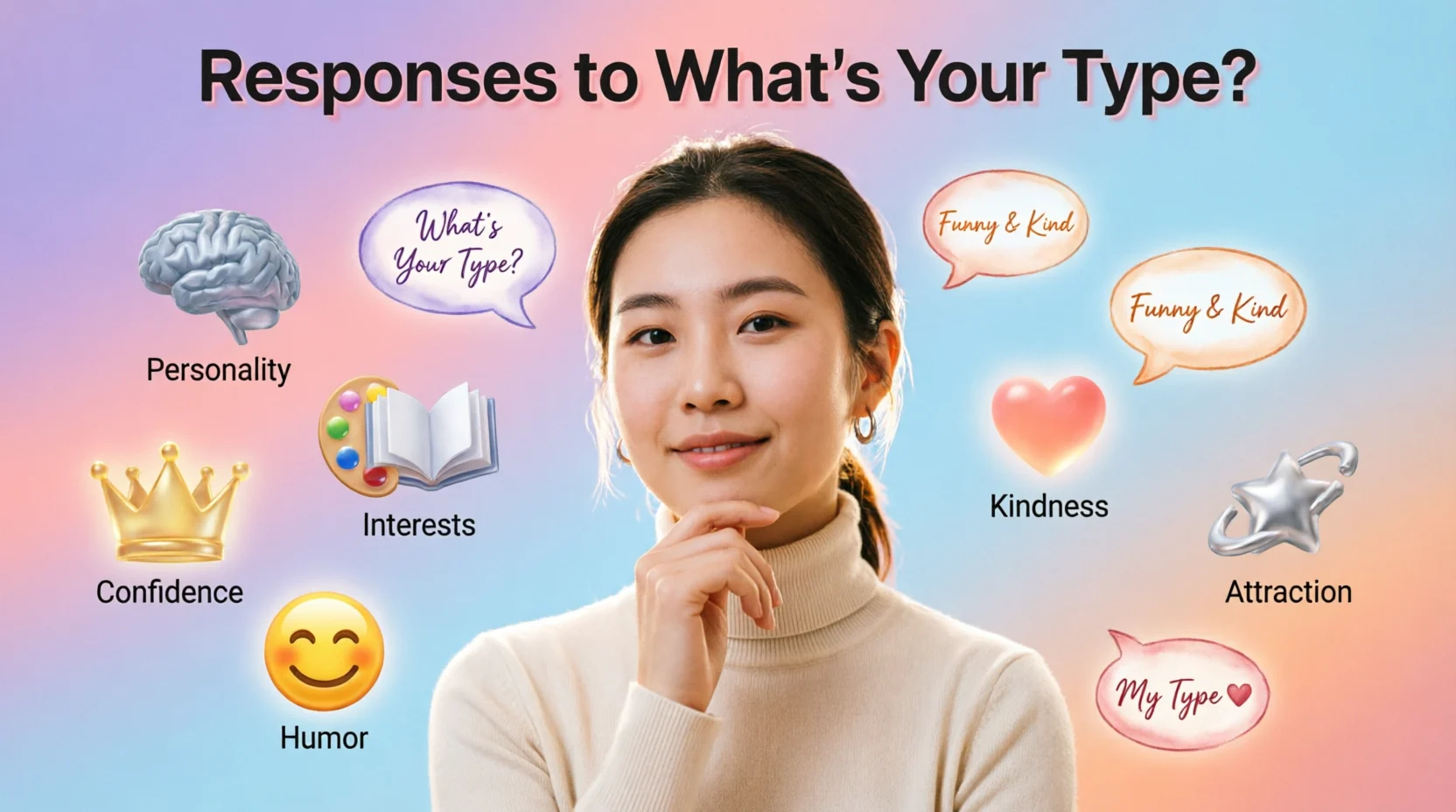
When someone asks, “What’s your type?”, they may be genuinely curious about the kind of person you like—or they may be testing the waters romantically. Your answer can reveal your personality, values, sense of humor, and even whether you are interested in the person asking. That is why having a few good responses to whats your type can make the conversation much easier.
There is no single perfect answer. The best response depends on the situation, your relationship with the person, and how comfortable you feel sharing your preferences. You can be honest and straightforward, playful and flirty, funny and clever, or keep things mysterious. Here are 30 practical answers you can use in real conversations, dating apps, texts, and casual chats.
1. Give a Simple and Honest Answer
Sometimes the most attractive response is simply being genuine. You do not need a complicated description of your ideal partner.
Best for: Casual conversations and honest dating discussions.
Alternative: Mention personality traits instead of physical characteristics.
Examples:
“Someone kind, emotionally mature, and easy to talk to.”
“Honestly, I like people who are confident but still humble.”
2. Say You Like a Good Sense of Humor
A sense of humor is one of the easiest preferences to mention because it keeps the conversation positive and approachable.
Best for: Dating conversations and getting-to-know-you chats.
Alternative: Say you want someone who can make you laugh even on difficult days.
Examples:
“My type is someone who can make me laugh without trying too hard.”
“Someone funny, but not the kind who turns every conversation into a stand-up routine.”
3. Give a Flirty Response
If you are attracted to the person asking, “What’s your type?” can be a perfect opportunity to flirt.
Best for: Someone you already have chemistry with.
Alternative: Hint that they might already fit your type.
Examples:
“Funny, confident, and maybe a little bit like you.”
“I could tell you, but I think you might be closer to my type than you realize.”
4. Turn the Question Back on Them
You do not always have to answer immediately. Asking about their type can make the conversation more balanced and interesting.
Best for: When you want to keep the conversation going.
Alternative: Answer briefly and then ask what they like.
Examples:
“I have a few ideas, but I’m more curious about yours. What’s your type?”
“Interesting question. What kind of person usually catches your attention?”
5. Use a Funny Answer
Humor works especially well when you do not want the conversation to feel too serious.
Best for: Friends, casual chats, and playful conversations.
Alternative: Use an exaggerated or unexpected preference.
Examples:
“My type? Someone who respects my snacks and understands my weird jokes.”
“Someone emotionally available and willing to share fries. I have standards.”
6. Focus on Personality
If you care more about character than appearance, say so. It gives the other person a clearer picture of what matters to you.
Best for: Meaningful conversations and dating.
Alternative: Mention qualities such as kindness, loyalty, patience, or confidence.
Examples:
“I’m drawn to people who are kind, thoughtful, and comfortable being themselves.”
“Someone with a good heart and enough confidence to be genuine.”
7. Give a Mysterious Answer
A little mystery can make your response more intriguing without being dishonest.
Best for: Flirting and playful conversations.
Alternative: Say that chemistry matters more than having a fixed type.
Examples:
“I have a type, but somehow I always end up liking the unexpected person.”
“If I told you everything, where would be the fun?”
8. Say You Do Not Have a Fixed Type
Not everyone has a specific ideal. Sometimes attraction depends on the individual person.
Best for: Honest conversations when your preferences vary.
Alternative: Explain that personality and chemistry influence attraction.
Examples:
“I don’t really have one specific type. It’s more about the connection.”
“I’ve realized my type is usually just someone I genuinely click with.”
9. Mention Emotional Intelligence
Emotional maturity can be a meaningful preference, especially when discussing serious relationships.
Best for: Dating and conversations about long-term compatibility.
Alternative: Mention communication and self-awareness.
Examples:
“Someone emotionally intelligent who can communicate instead of playing games.”
“My type is someone who knows how to talk through problems calmly.”
10. Describe Your Ideal Partner
Instead of listing random traits, describe the overall kind of relationship you want.
Best for: Serious dating conversations.
Alternative: Talk about how you want to feel around someone.
Examples:
“Someone I can laugh with, trust completely, and be myself around.”
“I like someone who feels like both a partner and my favorite person to talk to.”
11. Give a Cute Response
A sweet answer can make the conversation feel warm without becoming overly romantic.
Best for: Early-stage flirting and friendly conversations.
Alternative: Mention small, thoughtful qualities.
Examples:
“Someone who remembers the little things I tell them.”
“Someone who checks in just because they were thinking about me.”
12. Talk About Confidence
Confidence can be attractive when it is balanced with humility.
Best for: Dating conversations and discussing attraction.
Alternative: Say you like someone comfortable with themselves.
Examples:
“I like confident people who don’t need to prove they’re the best in the room.”
“Someone who knows their worth but still treats everyone respectfully.”
13. Say You Like Ambitious People
If motivation and personal growth matter to you, ambition is a natural preference to mention.
Best for: Conversations about goals, careers, and relationships.
Alternative: Focus on having direction rather than career success.
Examples:
“I like someone who has goals and actually works toward them.”
“My type is someone passionate about building a life they’re proud of.”
14. Mention Kindness
Kindness is simple, universal, and meaningful. It also avoids making your answer sound overly focused on appearance.
Best for: Almost any conversation.
Alternative: Mention how someone treats people when they have nothing to gain.
Examples:
“Kindness is probably at the top of my list.”
“I’m attracted to people who are genuinely kind, especially when nobody is watching.”
15. Give a Physical Preference
There is nothing wrong with mentioning appearance if that is genuinely part of attraction. Keep it respectful and avoid making your answer unnecessarily specific.
Best for: Dating conversations where physical attraction is already being discussed.
Alternative: Combine appearance with personality.
Examples:
“I tend to notice expressive eyes and a great smile.”
“I like someone with a relaxed style and confident presence, but personality matters more.”
16. Give a “Green Flags” Answer
Talking about green flags can be more useful than simply listing a physical type.
Best for: Dating apps and relationship conversations.
Alternative: Mention qualities that make you feel comfortable and respected.
Examples:
“Good communication, consistency, kindness, and a sense of humor.”
“My type is basically someone who listens, communicates, and follows through.”
17. Use a Sarcastic Response
A little sarcasm can make your answer memorable when the conversation is already playful.
Best for: Friends or someone who appreciates your humor.
Alternative: Give an intentionally impossible list.
Examples:
“My type is someone who texts back, communicates clearly, and apparently exists only in fiction.”
“Someone attractive, funny, loyal, emotionally mature, and willing to do the dishes. So, basically a mythical creature.”
18. Answer With “Someone Like Me”
This response works when you want to show confidence or create a playful opening.
Best for: Flirty conversations.
Alternative: Say you like someone who shares your personality or values.
Examples:
“Someone like me, but slightly better at making decisions.”
“Someone who understands my energy without needing everything explained.”
19. Say You Like Good Communication
Communication is one of the most practical qualities to mention when discussing relationships.
Best for: People looking for meaningful compatibility.
Alternative: Mention honesty and directness.
Examples:
“I like someone who says what they mean instead of making me guess.”
“Good communication is definitely part of my type.”
20. Make It About Chemistry
Sometimes attraction cannot be reduced to a checklist. Chemistry can develop unexpectedly.
Best for: People who dislike rigid dating preferences.
Alternative: Mention how naturally you connect with someone.
Examples:
“My type is someone I have effortless chemistry with.”
“I don’t have a strict type. If the conversation flows and the connection feels right, I’m interested.”
21. Give a Romantic Answer
If the conversation is already emotional or romantic, you can make your response more heartfelt.
Best for: Someone you are seriously interested in.
Alternative: Describe the emotional experience you want.
Examples:
“My type is someone who makes ordinary days feel special.”
“Someone I can build something real with and still laugh with years later.”
22. Keep Your Answer Short
You do not owe anyone a detailed explanation of your preferences. A short answer can sound confident.
Best for: Casual questions or situations where you do not want to overshare.
Alternative: Give two or three traits.
Examples:
“Kind, funny, and confident.”
“Smart, genuine, and emotionally mature.”
23. Say You Like Someone Who Challenges You
Intellectual or personal growth can be an important part of attraction.
Best for: People who enjoy deep conversations.
Alternative: Mention someone who encourages you to grow.
Examples:
“I like someone who can challenge my opinions without disrespecting me.”
“My type is someone who makes me think differently and keeps life interesting.”
24. Give a Dating-App-Friendly Answer
On dating apps, your answer should be specific enough to start a conversation but not so detailed that it sounds like a job description.
Best for: Dating profiles and online conversations.
Alternative: Mention personality plus one playful detail.
Examples:
“Kind, curious, funny, and always down for spontaneous plans.”
“Someone emotionally mature who can hold a great conversation and knows the best food spots.”
25. Say You Like Someone Who Is Independent
Independence can signal that you value a healthy relationship rather than constant dependence.
Best for: Mature dating conversations.
Alternative: Mention someone who has their own interests and friendships.
Examples:
“I like someone who has their own goals, hobbies, and life.”
“My type is independent but still knows how to make a relationship feel like a partnership.”
26. Give a “Looks Don’t Matter Most” Answer
This can be useful when you want to emphasize substance over appearance.
Best for: Serious conversations.
Alternative: Say physical attraction matters, but it is not enough on its own.
Examples:
“I notice looks, of course, but personality is what makes me stay interested.”
“I don’t have a perfect physical type. How someone treats me matters much more.”
27. Use a Confident, Direct Answer
Confidence does not mean being overly demanding. A clear answer can simply show that you know what you want.
Best for: Dating conversations with someone you trust.
Alternative: State your top three qualities.
Examples:
“Someone honest, affectionate, and confident.”
“I know I want someone kind, consistent, and comfortable communicating openly.”
28. Make the Answer Playfully Personal
Adding a small personal detail can make your answer sound natural instead of rehearsed.
Best for: Texting and conversations with someone you already know.
Alternative: Include a hobby, habit, or personality trait.
Examples:
“Someone who can keep up with my random conversations and spontaneous plans.”
“Someone who enjoys late-night conversations, good food, and laughing at completely unnecessary things.”
29. Tell Them What Is Not Your Type
Sometimes boundaries reveal your preferences more clearly than a list of ideal qualities.
Best for: Honest dating conversations.
Alternative: Mention behaviors you value instead.
Examples:
“Someone who plays mind games definitely isn’t my type.”
“I’m not into arrogance or inconsistency. I prefer someone genuine and straightforward.”
30. Give the Ultimate Flirty Answer
When there is obvious chemistry, you can turn the question into a playful compliment.
Best for: Someone you are attracted to and comfortable flirting with.
Alternative: Suggest that the person asking may already qualify.
Examples:
“Honestly? My type might be standing right in front of me.”
“I had a type before you started talking to me.”
FAQs:
What is the best response to “What’s your type?”
The best response is one that feels natural to you. You can mention personality traits, appearance, values, or simply say that chemistry matters more than having a fixed type.
How do I answer “What’s your type?” if I like the person asking?
A playful response can work well. Try something like, “Someone funny, confident, and maybe a little like you.” It shows interest without making the conversation too serious.
How do I answer “What’s your type?” without flirting?
Keep your response straightforward and focus on personality. For example, “I usually like people who are kind, honest, funny, and easy to talk to.”
What should I say if I do not have a type?
You can be completely honest. Try, “I don’t really have a specific type. I usually know when I click with someone.” This keeps your answer genuine while inviting further conversation.
Is it better to mention personality or looks?
There is no universal right answer. If personality is more important to you, focus on qualities such as kindness, humor, communication, confidence, and emotional maturity. If physical attraction matters too, you can mention it respectfully while explaining that attraction is about more than appearance.
Conclusion
The best responses to whats your type are not necessarily the cleverest ones—they are the answers that fit your personality and the situation. If you want to be funny, honest, mysterious, cute, or openly flirty, you have plenty of ways to respond without sounding rehearsed.
When in doubt, focus on qualities that genuinely matter to you: kindness, humor, confidence, communication, emotional maturity, ambition, or simply having great chemistry.
And if you are talking to someone you like, remember that “What’s your type?” can be more than a random question—it can be an invitation to learn more about each other. Use the opportunity to be authentic, have fun, and let the conversation naturally develop.

Hi, I’m Victor Payne. I enjoy creating thoughtful reply ideas that help people communicate with confidence. My goal is to make conversations easier, friendlier, and more meaningful through practical, engaging, and relatable content.